
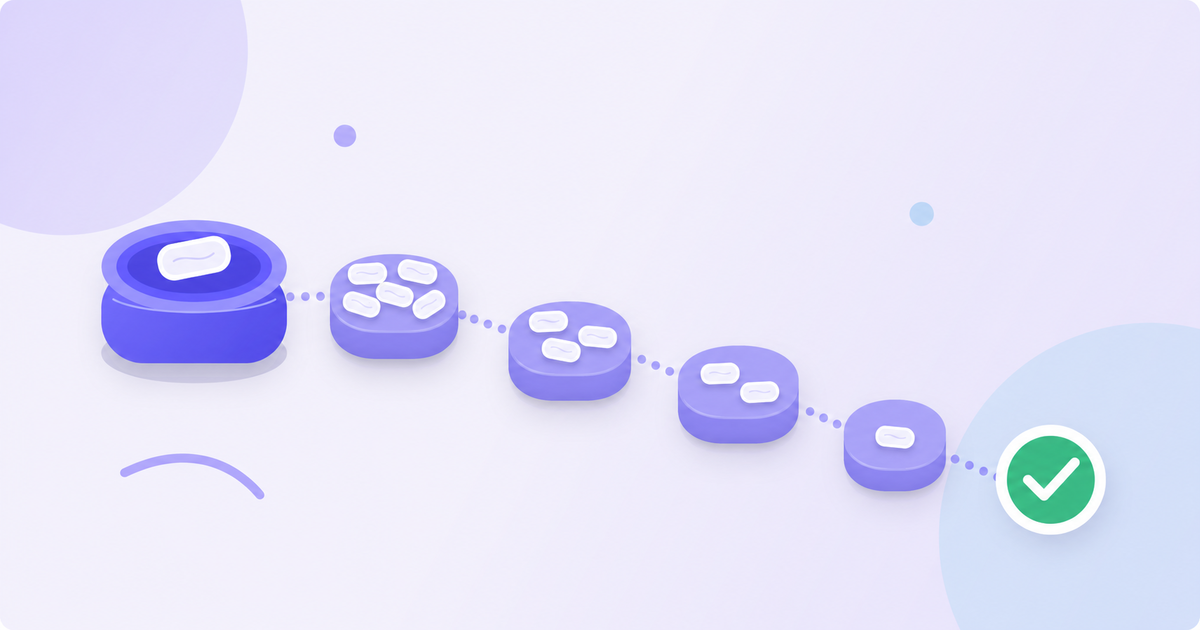
A nicotine pouch reduction plan turns “I should use less” into numbers and decisions you can actually follow. It starts with what you use now, sets a clear daily limit and gives you a regular point to review what happened.
The plan should not pretend there is one perfect schedule. Nicotine pouches vary widely in strength, people use them differently, and pouch-specific quitting evidence is still limited. The goal is to create enough structure to cut down without losing sight of withdrawal, other nicotine sources or your health.
Start here: record a normal week, choose one measure to change, and set a daily limit that feels challenging but doable. Keep logging even when the day does not go to plan.
On this page
- What a reduction plan should include
- Step 1: record an honest baseline
- Step 2: choose count or strength
- Step 3: set your first daily limit
- Step 4: plan around the difficult moments
- Step 5: review before changing the limit
- What to do when you go over
- When to get extra support
- Frequently asked questions
What a reduction plan should include
A useful plan has five parts:
- Baseline: your normal daily count, pouch strength and timing.
- Daily limit: the maximum number you plan to use that day.
- Plan target: the specific pouch, time or strength change that will create the lower total.
- Review point: a date when you look at several days together.
- Next step: keep the limit, change it, or add more support.
This keeps the plan connected to your real routine. A target such as “use less” gives you nothing to compare at the end of the day. “Daily limit: 9; skip the automatic pouch after lunch” is measurable.
The UK's Committee on Toxicity notes that oral nicotine pouches deliver an active dose of nicotine and are not harmless. It also warns that using pouches alongside other nicotine products can increase and prolong exposure. Include every nicotine source when you decide what your baseline means.
Step 1: record an honest baseline
Log a normal seven-day period before trying to improve the numbers. Include workdays, weekends and any social situations that change your routine.
For every pouch, record:
- the time;
- milligrams per pouch;
- the situation or trigger;
- whether it felt planned or automatic;
- other nicotine used that day.
At the end of the week, calculate:
- average daily pouch count;
- highest and lowest daily count;
- total labelled nicotine each day;
- time of the first and final pouch;
- shortest gaps between pouches.
Labels can be confusing because one can may state milligrams per pouch while another states milligrams per gram. Read how to compare daily pouch count with labelled nicotine, then use the nicotine pouch calculator to convert the figures when you know the weight of one pouch.
The calculation is a labelled total, not an absorbed dose. Product formulation, pH, moisture, time in the mouth and the individual can all change nicotine delivery.
Step 2: choose count or strength
You can cut down by changing how many pouches you use, the strength of each pouch, or eventually both. Start with one measure so the result stays understandable.
Change pouch count first when your routine contains obvious automatic pouches. Examples might include a short drive, the moment a meeting ends or the point when you sit down to play a game.
Change strength first when the timing feels difficult to alter but the pouches are high in nicotine. Confirm the units on the can rather than relying on dots or words such as strong.
Do not compensate without noticing. One fewer pouch does not lower the labelled daily total if the remaining pouches become much stronger. A lower strength does not change much if you respond by using several more.
The CDC's nicotine pouch guidance says products contain different amounts of nicotine and can reach high levels. It also notes that nicotine pouches are not approved by the US FDA as a smoking-cessation aid.
Step 3: set your first daily limit
Use your baseline to choose a limit just below what you normally use. There is no universal step size or timetable.
For example, someone averaging 10 pouches per day might compare a daily limit of 9. That is an illustration of the method, not a recommended schedule. Someone else may need a different first change, more breathing room or clinical advice.
Write down three things:
| Plan detail | Example |
|---|---|
| Current baseline | 10 pouches per day |
| Daily limit | 9 pouches |
| Planned change | No automatic pouch after lunch |
Decide before the day begins. Making the decision during a strong craving turns the plan into a repeated negotiation.
Keep the can out of immediate reach and carry only the amount you intend to use where practical. The purpose is not punishment. It is to create a moment of choice between the trigger and the pouch.
Step 4: plan around the difficult moments
A smaller limit leaves a gap in the routine. Decide what will happen in that gap before it arrives.
Match the response to the situation:
- schedule a real break when the pouch normally divides long work sessions;
- keep water or sugar-free gum available for driving;
- move the can away from the desk or bedside;
- delay the decision for ten minutes and start a specific task;
- tell someone which part of the day is usually difficult;
- reduce alcohol during the early part of the plan if it makes you lose count.
Cravings can come from both nicotine withdrawal and learned triggers. The NHS guidance on triggers and cravings recommends planning for difficult situations and using practical distractions. Its guidance is written for smoking, but the distinction between nicotine withdrawal and routine-driven cues is relevant when cutting down other nicotine products.
Step 5: review before changing the limit
Do not judge the plan using one easy morning or one difficult evening. Review several days together.
Ask:
- How often did you stay within the daily limit?
- Which pouch was hardest to remove or delay?
- Did strength change while count went down?
- What happened to sleep, mood and concentration?
- Did another nicotine source increase?
- Does the same trigger appear on missed days?
If the limit is becoming manageable, decide whether to keep it longer or take the next small step. If every day feels unmanageable, the answer may be more support or more breathing room rather than abandoning the plan.
Poucho uses daily plan targets and progress views so you can compare the plan with what actually happened. That record matters because memory tends to flatten the difference between a difficult day and the whole week.
What to do when you go over
Log the extra pouch. Do not hide it and do not treat it as permission to stop tracking for the rest of the day.
Then record:
- the time;
- what was happening;
- how strong the craving felt;
- whether the pouch strength or other nicotine use changed;
- what might make that moment easier next time.
A missed target is information. It may show that the planned change targeted the wrong part of the day, that the limit moved too quickly or that withdrawal needs professional support.
The purpose of a reduction plan is progress you can understand, not a perfect streak created by incomplete records.
When to get extra support
Cutting down can cause cravings, irritability, restlessness, poor concentration, low mood, anxiety and trouble sleeping. The NHS guide to nicotine withdrawal says symptoms after stopping smoking are often strongest in the first week, particularly the first three days, and commonly last three to four weeks. Timing for pouch reduction can differ.
A 2025 Cochrane review found no evidence on using oral nicotine pouches to stop or reduce other nicotine products. That uncertainty is one reason not to present a self-directed pouch schedule as a medical treatment.
Speak with a pharmacist, doctor or stop-smoking adviser if withdrawal is difficult to manage, you repeatedly cannot stay within a limit, you also smoke, or nicotine use is affecting your health. Get urgent help for severe symptoms, chest pain, collapse, breathing problems or a major change in mood.
If your goal is to stop completely, the guide to how to quit nicotine pouches focuses on cravings, withdrawal, routine changes and professional support.
Frequently asked questions
How do I make a nicotine pouch reduction plan?
Record a normal week, calculate your average daily count and labelled nicotine, choose one clear daily limit, decide which pouch or strength change will create it, and review the pattern before changing the limit again.
How quickly should I lower my daily pouch limit?
There is no universal schedule. Your starting count, pouch strength, withdrawal, other nicotine use and health all matter. Choose a pace that feels challenging but doable and keep each limit long enough to learn from it.
What happens if I go over my daily limit?
Log the pouch and continue with the plan. Review the time, trigger, strength and whether the current step needs more support or breathing room.
Should I reduce pouch count or strength first?
Start with the measure you can track most reliably and change one thing at a time. Count may suit routine-driven use, while a lower strength may be easier when timing is harder to change.
Poucho helps you record each pouch, compare daily count and labelled nicotine, follow daily plan targets and see progress through a personalised reduction plan.
This article provides general information, not individual medical advice. If nicotine use is affecting your health, you are pregnant, or withdrawal is difficult to manage, speak with a qualified healthcare professional.
Ready to cut down?
Track every pouch and follow daily limits built around your routine.